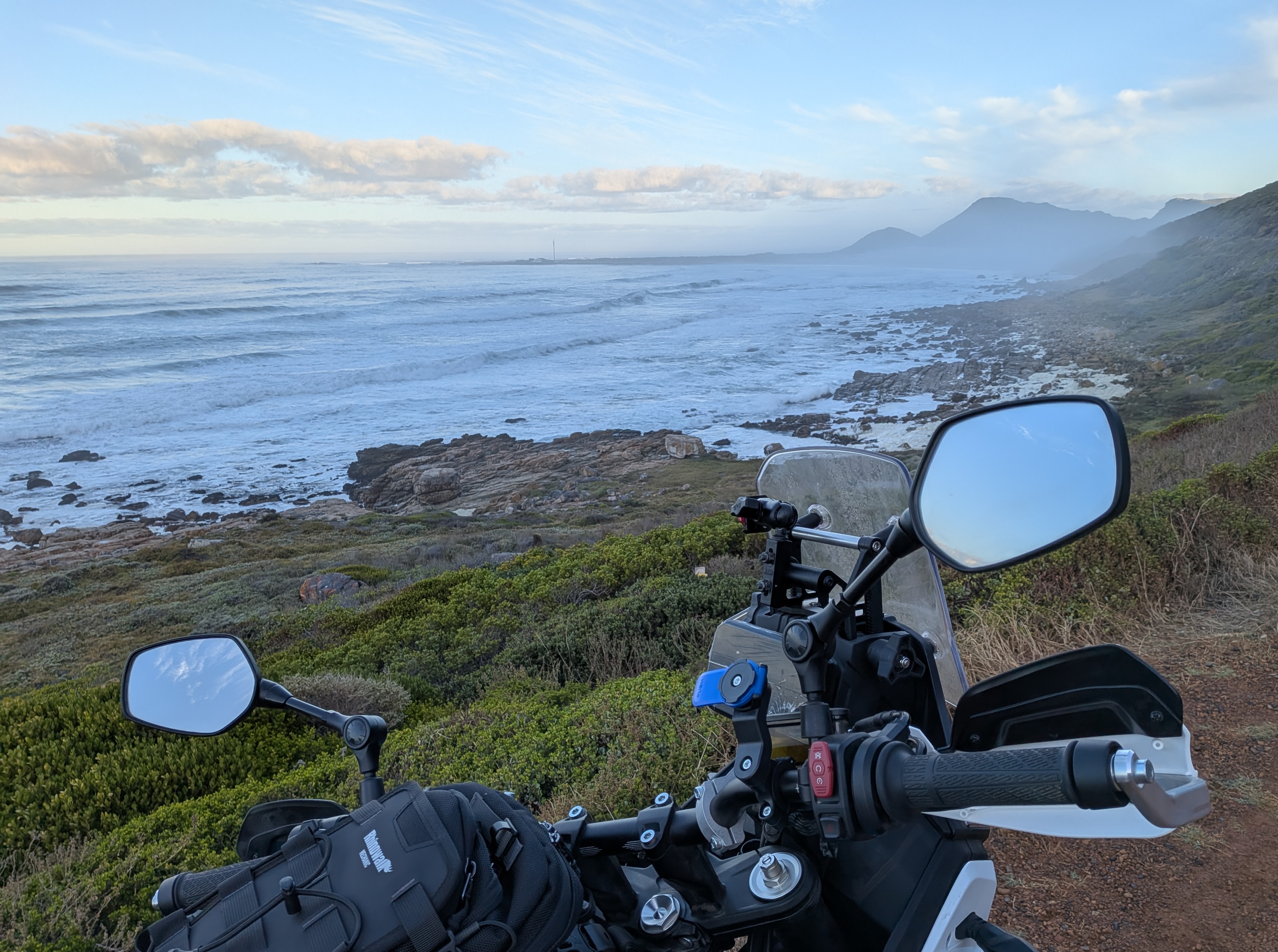
Southern Africa has distinct seasons that dramatically affect riding conditions. Getting the timing right makes the difference between a good tour and an extraordinary one.
April to June (Autumn) — Excellent
This is our favourite period. The summer rains have ended, the bush is still green, and temperatures are comfortable across all elevations. Days are warm and sunny, nights cool but not cold. Wildlife visibility improves as vegetation thins. The Garden Route is at its best, and the Drakensberg passes are open and dry.
July to August (Winter) — Good with caveats
The dry season brings clear skies and excellent visibility, but cold nights — especially on the highveld and in the mountains. Sani Pass can have ice in the early morning. Days are often warm and sunny at lower elevations. Wildlife viewing is at its peak as animals congregate around water sources. A good riding season if you're prepared for the cold.
September to November (Spring) — Very Good
Temperatures rise, wildflowers bloom across the Western Cape, and the first rains arrive in November. September and October are arguably the best months of the year — warm, dry, and with lush landscapes recovering from winter. November brings afternoon thunderstorms in some areas, but mornings are typically clear.
December to March (Summer) — Challenging
Summer brings intense heat across much of the interior, heavy rains in the east and Limpopo regions, and flooded river crossings on less-maintained roads. The Garden Route remains pleasant. This is low season for our tours — we run a reduced schedule and focus on the cooler Western and Northern Cape regions.
Regional Variations
The Western Cape and Garden Route are winter-rainfall areas, meaning they can be wet from June to August. Namibia is best visited May to October. The Drakensberg has afternoon thunderstorms from October to February. Always check conditions for the specific regions you're riding through.